1
2

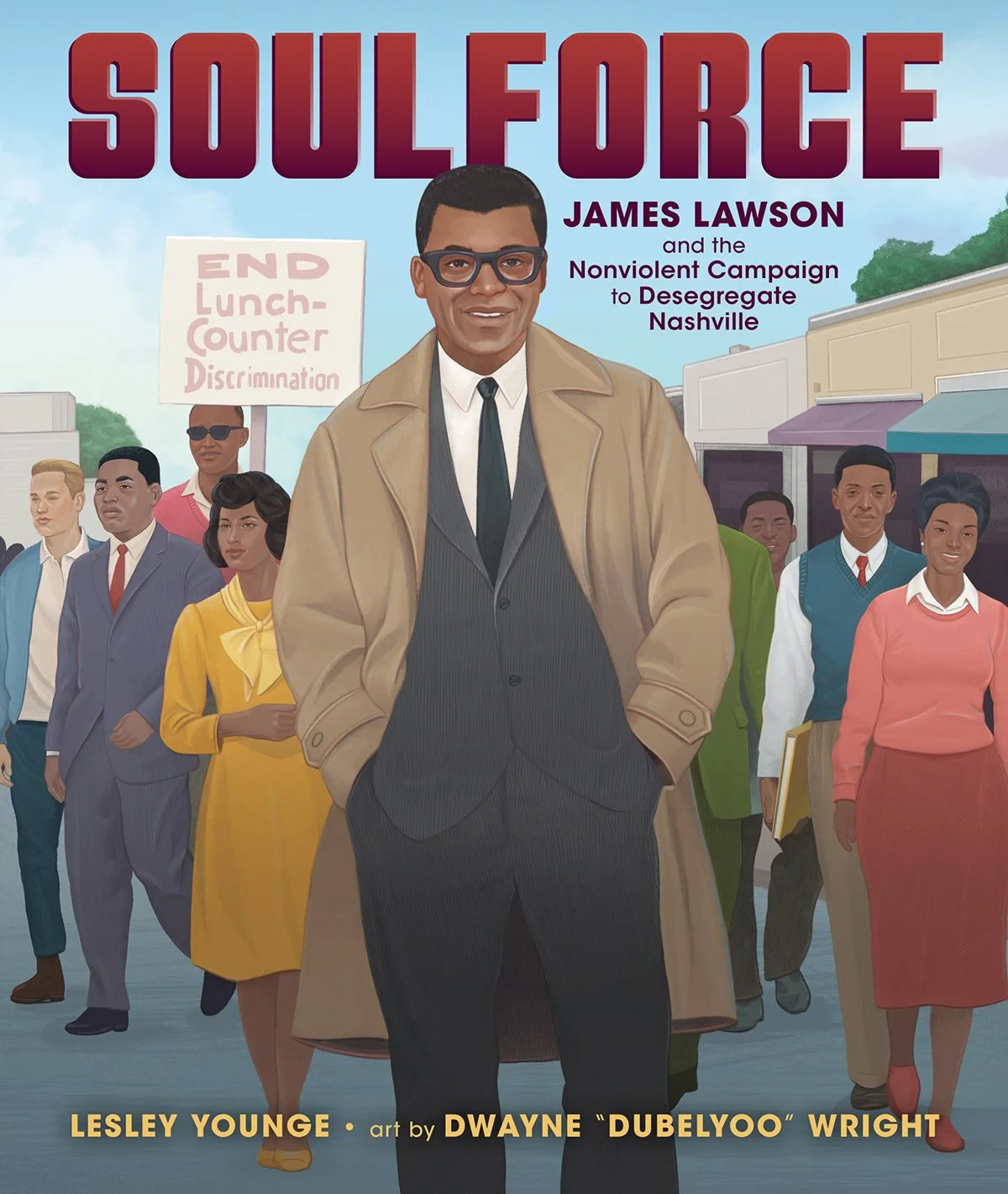
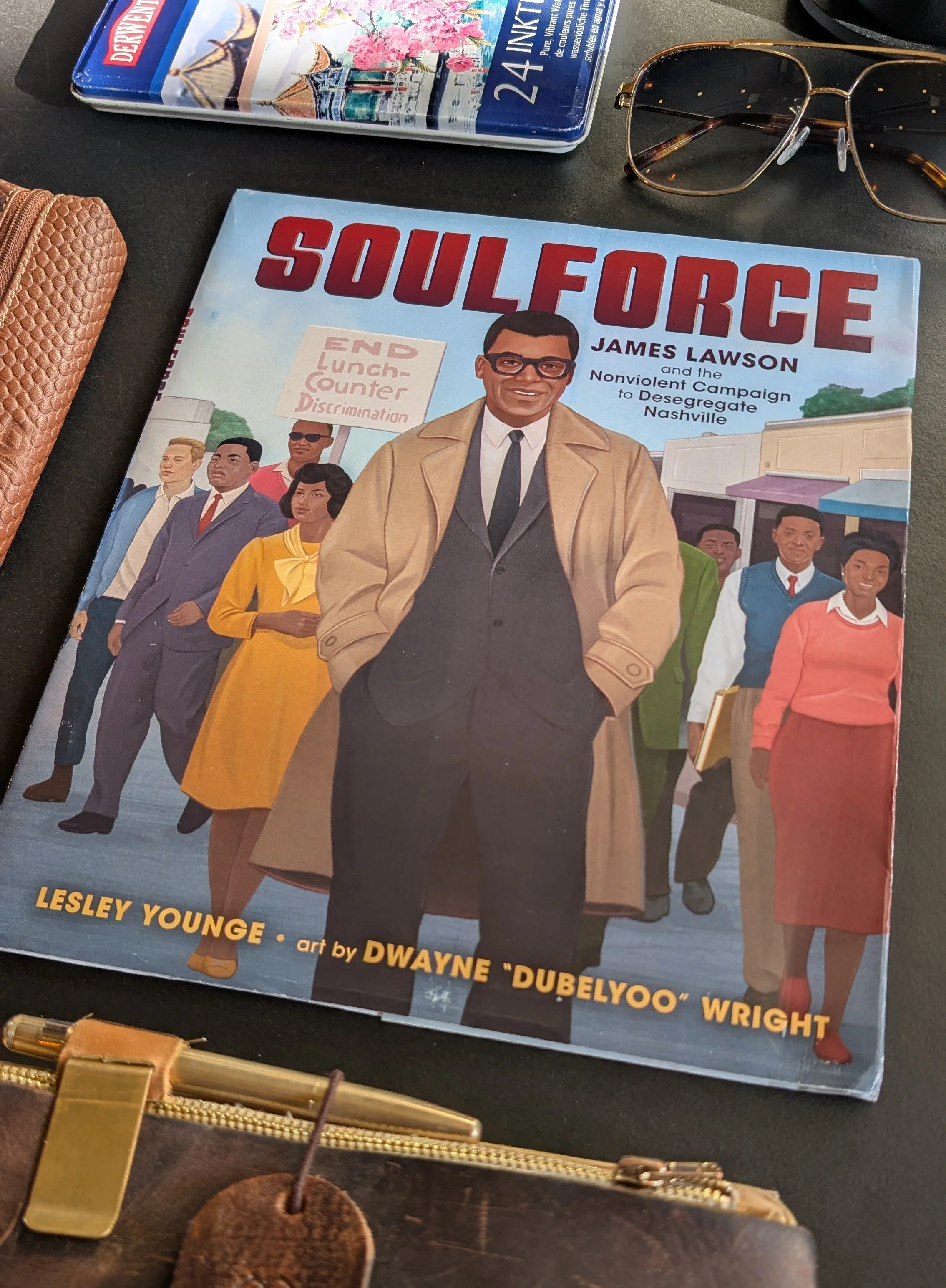
Younge and Wright explore the life and legacy of activist and educator James Lawson (1928–2024), a pivotal civil rights movement figure who championed nonviolence as a tool for social change. After a young Lawson strikes a white child who shouts a slur at him, Lawson’s mother encourages him to find another way to confront injustice. This incident prompts him to study Mohandas Gandhi’s philosophy of satyagraha, a feeling that Lawson called “soulforce,” deepening his commitment to peaceful resistance. Lawson soon leads workshops on nonviolence and helps to plan a Nashville-based campaign against segregation (“Step one: Focus... Step two: Negotiate... Step three: Direct action”), even training young organizers, including Diane Nash and John Lewis. These preparations prove essential during the 1960 Nashville lunch counter sit-ins, rendered in expressive digital illustrations that capture tense scenes of protest and retaliation. It’s a stepwise look at a person, and a belief, that contributed to significant collective action. Back matter includes an author’s note and core principles of nonviolent protest. Ages 7–11. (Feb.)